Heyy... are you really leaving without your FREE eBook!?!

Come on... drop your email in the box below and get that eBook ASAP to learn
27 ways to improve your health with Liquid Coconut!
No worries, you’ll get only the real good stuff from us.
Get your eBook FREE of charge below!

Different Sources of Energy for the Body: How Your Body Powers Itself
Wednesday, December 03, 2025
Different Sources of Energy for the Body: How Your Body Powers Itself
Every step you take, every thought you have, and every heartbeat relies on energy. But did you know your body can tap into multiple energy sources depending on the intensity, duration, and type of activity? Understanding these sources can revolutionize your performance, recovery, and overall health.
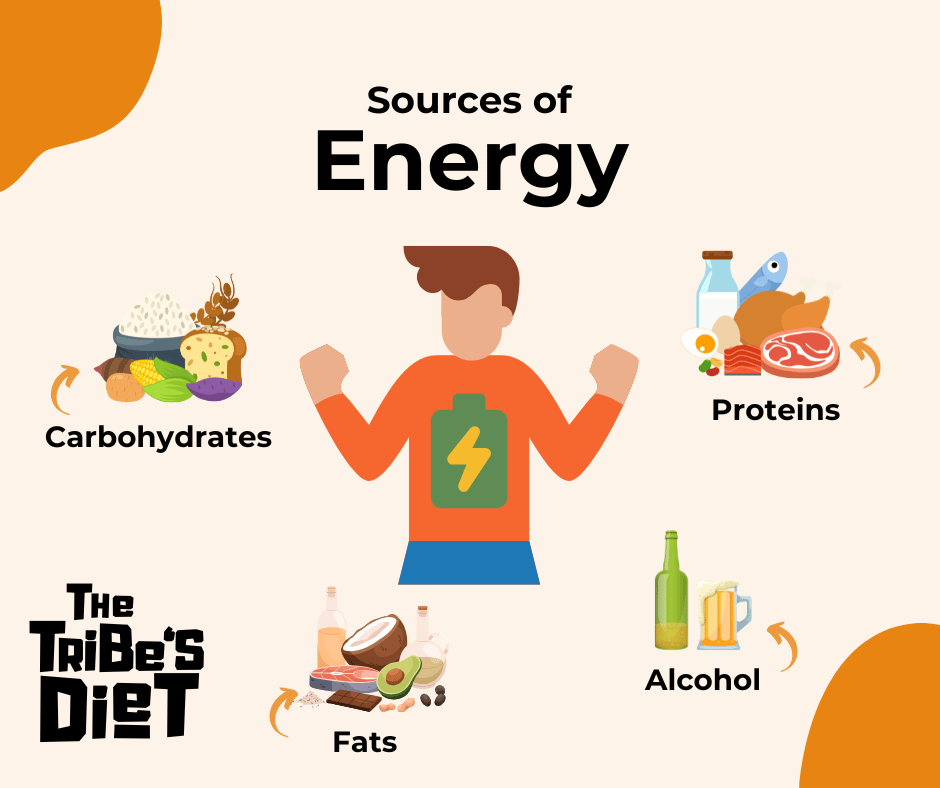
The human body constantly requires energy to perform functions ranging from breathing and maintaining body temperature to running, lifting, and thinking. This energy comes from macronutrients — carbohydrates, fats, proteins — and in certain conditions, alcohol, but ultimately, it is stored and used as ATP (adenosine triphosphate)at the cellular level.
Carbohydrates: The Body’s Rapid Energy Source
Carbohydrates are the primary and most efficient energy source, especially for high-intensity activities.
- How They Work: Carbs are broken down into glucose, which fuels cells immediately or is stored as glycogen in muscles and the liver. During exercise, glycogen is mobilized to provide rapid energy.
- Energy Pathways:
- Anaerobic Glycolysis: Converts glucose into ATP without oxygen for short bursts (30 seconds–2 minutes), producing lactate.
- Aerobic Oxidation: Uses oxygen to metabolize glucose for sustained activity (endurance exercise).
- Sources: Whole grains, fruits, vegetables, legumes, potatoes, and starchy foods.
- Benefits: Quick energy availability, supports brain function, maintains blood sugar stability, and promotes exercise performance.
- Health Considerations: Overconsumption of refined carbs can contribute to insulin resistance, weight gain, and metabolic disorders.
Fats: The Long-Term, High-Density Energy Source
Fats are the most energy-dense macronutrient (9 kcal per gram), providing sustained energy during prolonged or moderate-intensity activity.
- How They Work: Fats are broken down into fatty acids and converted into ATP through beta-oxidation in mitochondria. This is slower than carb metabolism but efficient for endurance activities.
- When They’re Used: During rest, low-intensity activity, or prolonged exercise when glycogen stores are depleted.
- Sources: Nuts, seeds, avocados, olive oil, fatty fish, coconut oil.
- Benefits: Supports endurance, brain function, hormone synthesis, cell membrane integrity, and absorption of fat-soluble vitamins.
- Health Considerations: While essential, excessive saturated and trans fats increase cardiovascular risk. Prioritize unsaturated fats for optimal health.
Proteins: The Backup Energy Source
Proteins are primarily used for tissue repair, enzyme and hormone synthesis, but can serve as energy during prolonged fasting, starvation, or very low-carbohydrate diets.
- How They Work: Proteins are broken down into amino acids, which can be converted into glucose through gluconeogenesis or directly metabolized for energy.
- When They’re Used: Mostly during catabolic states, such as extended exercise, illness, or caloric restriction.
- Sources: Lean meats, poultry, fish, eggs, dairy, legumes, soy, and nuts.
- Benefits: Provides backup energy, preserves metabolic function, and supports muscle retention during energy deficits.
- Health Considerations: Using protein as a primary energy source is inefficient and may stress the kidneys and compromise muscle mass if intake is insufficient.
Alcohol: A Non-Essential Energy Source
Alcohol provides 7 kcal per gram and can contribute to energy supply, though it is non-essential and nutrient-poor.
- How It Works: Ethanol is metabolized in the liver into acetyl-CoA, which can enter the energy production pathways.
- Considerations: Alcohol provides “empty calories,” can impair nutrient absorption, affect liver metabolism, and decrease physical performance.
ATP: The Cellular Energy Currency
Regardless of macronutrient source, all energy is ultimately converted into ATP, the molecule that powers every cell. The body produces ATP via three primary energy systems:
1- Phosphagen System (Immediate Energy): Uses stored ATP and creatine phosphate for short, high-intensity bursts (0–10 seconds), such as sprinting or weightlifting.
2- Anaerobic Glycolysis (Short-Term Energy): Converts glucose to ATP without oxygen for activities lasting 30 seconds to 2 minutes, producing lactate.
3- Aerobic Respiration (Long-Term Energy): Uses oxygen to metabolize carbs, fats, and sometimes proteins for sustained energy during endurance activities.
Understanding which system predominates depending on activity intensity and duration can help tailor nutrition and performance strategies.
Other Energy Considerations
- Creatine phosphate: Provides immediate energy in muscle cells for very short, explosive movements.
- Ketones: Produced from fat breakdown during prolonged fasting, low-carb diets, or ketogenic states; serve as alternative brain and muscle fuel.
- Glycogen depletion: When glycogen stores are exhausted, fatigue sets in, and fat/protein metabolism predominates.
Practical Tips for Optimizing Energy
1- Time your carbohydrates: Consume carbs before and after high-intensity workouts to fuel performance and replenish glycogen.
2- Include healthy fats: For endurance or low-intensity activities, fats provide sustained energy.
3- Prioritize protein: Use protein mainly for tissue repair, not as a primary energy source.
4- Stay hydrated: Water is crucial for all metabolic processes, including energy production.
5- Consider supplements wisely: Creatine or branched-chain amino acids can enhance immediate and recovery energy, but whole food sources should remain primary.
Bottom Line
The body relies on multiple energy sources to maintain performance, brain function, and overall health:
- Carbohydrates provide rapid, high-intensity energy.
- Fats offer long-term, sustained energy.
- Proteins act as backup energy during extreme conditions.
- Alcohol can provide energy but is non-essential.
- ATP powers every cellular process.
- Ketones and creatine phosphate supplement energy under specific conditions.
Understanding these energy sources allows you to fuel your body efficiently, optimize workouts, prevent fatigue, and maintain metabolic health.
If you would like to learn more about the Tribe's Diet, how you can adhere to it, and what benefits it could bring you, be sure to follow us on your favorite social media or sign up for our Coco-Nuts Tribe Newsletter just down below.
Don’t forget that, by joining our Coco-Nuts Tribe Newsletter, you will receive my new FREE eBook – 27 Ways to Improve Your Health with Liquid Coconut.
I hope you enjoy it and talk to you next time!
Lenny Gee

Hi, I Am Lenny Gee
Co-Founder of Coco-Nuts.life
My love for nutrition and my passion for coconuts gave me this crazy idea to start this tropical adventure where we want to help you achieve wellness and enjoy life the way it should be.
FREE eBook
27 Ways To Improve Your Health With Liquid Coconut
Subscribe to our Tribe and receive our eBook FREE of cost.
Packed with useful recipes to guide you, and healthy benefits to inform you, this eBook makes it easier than ever for you to use our Liquid Coconut - totally FREE of charge.
Coco
-Nuts
Coco
-Nuts
Health ● Mind ● Body
Health ● Mind ● Body
Quick Links
© 2025 Coco-Nuts inc., ALL RIGHTS RESERVED
†These statement have not been evaluated by the Food & Drug Administration. This product do not intended to diagnose, treat, cure, or prevent any disease.
Information provided by this website or this company is not a substitute for individual medical advice.